Monday, March 30, 2015

Immunotherapy Advances Again: Lifespan Increased for Leukemia, Ovarian Cancers

The realm of immunotherapy has to do with the stimulation of the body's own immune system, or giving it a "boosting power", to treat a disease.  This departs from the conventional direct attack with a medication.  There are also other types of immunotherapy that are known as immunosuppression, such as drugs given to assist the body in not rejecting a transplanted organ that its immune system may recognize as a foreign invader, rather than an essential item.  Here, however, we will focus on activation immunotherapy, and its recent advancement against specific cancers.

The beginnings of immunotherapy actually arose in the 19th century when Dr. William Coley raised a culture of aggressive bacteria and injected it into the tumors of cancer patients.  Though he had success in his trial, he and other physicians were not able to duplicate the results.  Thus, immunotherapy, while never having gone away completely, was mostly shunned in favor of chemotherapy drugs and radiation.  A probable reason for the subsequent failures, it has been thought, is due to the fact that cancer is heterogeneous in nature, and even the same type can react very differently from patient to patient.  Thus, there need to be many more species of bacteria and viruses utilized for strengths and limitations in various cancers.

A three stage cyclic approach to immunotherapy with dendritic cells.
http://commons.wikimedia.org/wiki/File:Dendritic_cell_therapy.png
 
 Immunotherapy became slightly resurgent in the latter half of the 20th century with Interleukin.  Now, after the turn of the 21st century, more and more research centers are delving in to this previously fringe treatment that has the potential to surpass chemotherapy.

Recent trials with an immunotherapy called CAR T-cell therapy yielded a considerable breakthrough.  CAR stands for Chimeric Antigen Receptor, which are engineered to graft coding onto T-cells.  An obstacle to the body's ability to kill cancer is that cancer cells share a lot of the same DNA and traits as normal cells, so the immune system in its raw state has a hard time telling the difference and knowing which cells to attack and which to leave alone.  The CAR's boost the ability of the T-cells to distinguish between a cancer cell and a normal cell.  Trials, which began to report results in the latter half of 2014, was conducted on patients with acute lymphoblastic (ALL) leukemia.  Out of 100 patients, 70 have gone into complete remission 
 
A similar encouraging report was given by Texas Oncology, P.A. in a Phase II trial in process for ovarian cancer.  The patients that received the immunotherapy treatment have yet to have a recurrence of their cancer as of the end of March, 2015.  The patients that received the standard treatment had a recurrence at a median of 14.5 months.

In the months and years to come, the Sphere of Health will keep you updated on the progression of this old, but new realm of cancer treatment.  The moderating of oncolytic viruses, especially, has branched out in recent years, as we turn our enemy into an ally.  Bacteria and viruses that are usually thought of as hostile are going to be used to kill a body's greatest self manufactured enemy - cancer. 

Friday, March 20, 2015

Bacon: Healthy or Not?

When talking about food, a phrase rarely heard is, "I hate bacon".  And for good reason.  Its rich, fatty, salty taste, with a smoky or maple flavor usually added, rightfully earns its nickname of "meat candy".  As much as its taste is lauded, however, it is often paired with the same amount of nutritional concerns.  Ask the average person how healthy they think bacon is, and they will answer in the negative almost as certainly as they will answer in the positive about its flavor.  So, is bacon really as unhealthy as it is believed to be?

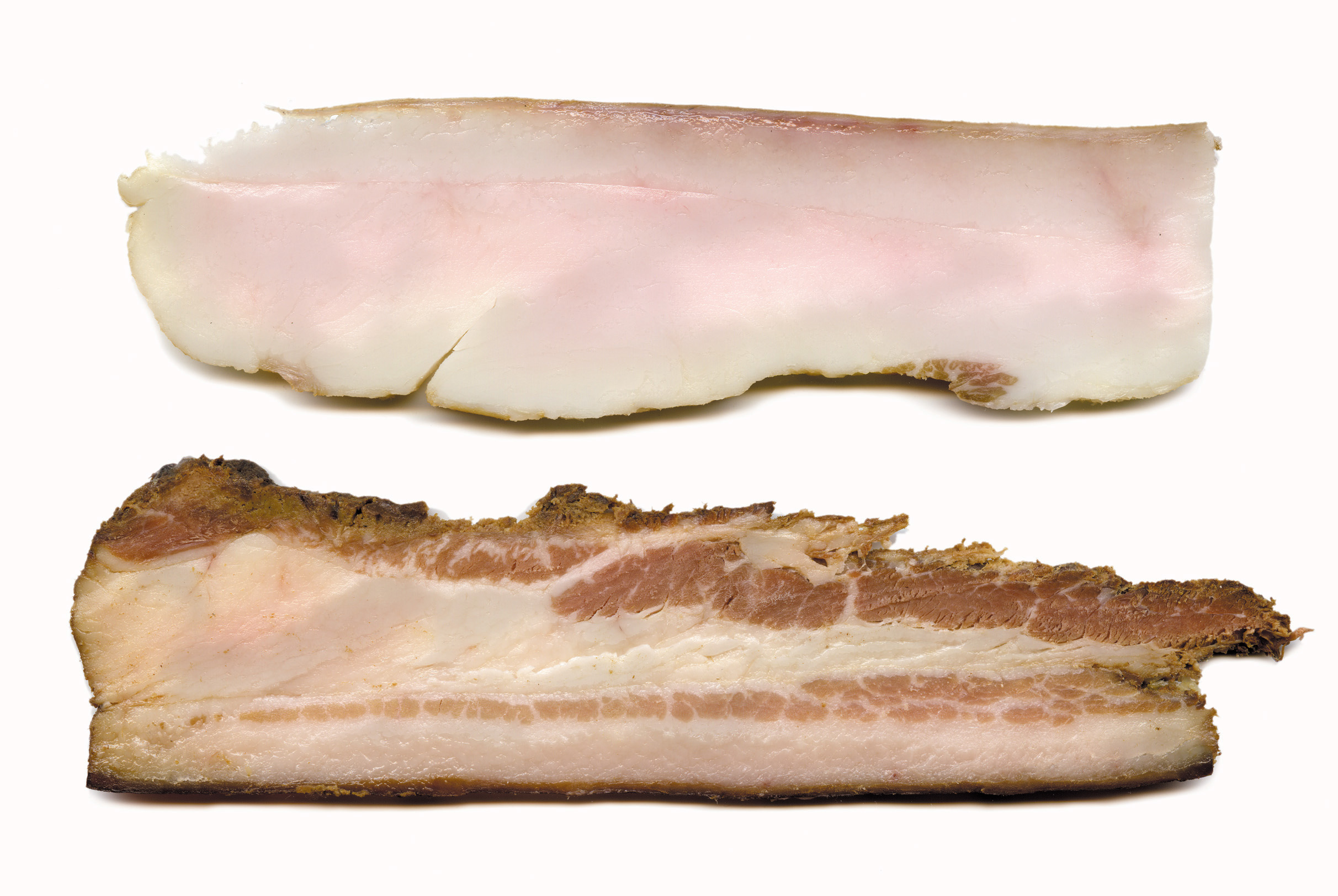
Two bacon strips.  The top, from the back.  Bottom, from the belly.
The short answer is: it depends on the bacon.  Contrary to popular belief, not all bacon is unhealthy.  There are two main deciding factors: the source of the animal, and the processing.  Also, contrary to another popular belief, the bacon that is unhealthy is not unhealthy due to the fact that it is fatty.  Fats are an important component of a healthy diet.
 In the United States, bacon is almost always made from pork belly.  In other countries, it is often from the side or the back.  Pork belly, of course, has a comparatively higher fat and lower protein content than the other parts.  Despite this, by volume, even fattier cuts of bacon contain significant protein.  Because it is pork, it is laden with the various Vitamin B molecules - 1, 2, 3, 6, and 12.  It is very high in selenium, phosphorus, potassium, and zinc - four essential trace elements.

Now, for the downsides to bacon.  Most of it is also extremely high in sodium.  Evident in its taste, it is heavily salted as part of its curing process.  As for much of the sourcing of it, most bacon you see at the majority of supermarkets in the United States are from factory farms.  It has come from pigs that were primarily grain fed, raised in a sedentary environment, and have been given hormones and various antibiotics.

During the processing of most factory farmed bacon, the meat is typically treated with phosphates, as well as sodium compounds such as sodium ascorbate. It is not bacon itself, but a lot of the chemicals and substandard sources that create these caveats, not bacon in and of itself.

Find a good source for your bacon, such as at a local farmer's market, or at a food store where it is well sourced; where the pigs have not been treated with hormones or antibiotics, and have ideally had a free range environment.  Pay careful attention to the other ingredients listed.  Make sure it is not full of many of the typical additives that are common in commercial bacon.  Pederson's Natural Farms is an example of a good quality bacon.

After you have found a good source, you can eat it by itself, or add it to various recipes!

Thursday, March 12, 2015

Leg Press: A Good (Auxiliary) Exercise (If Done Properly)

Trainers often tout the leg press as a safe alternative to squats, if one has injury prone knees or back.  However, squats can be beneficial for bad knees, provided they are done properly, and avoiding errors of form and execution.  That said, there are certain injuries, such as injuries to the back and hips, that may preclude you from squatting for a while.  Two popular alternatives are the hack squat, and the leg press.

Why the Leg Press is Popular

Simply put, it makes people feel strong.  Relative to squats or deadlifts, you can use a lot of weight.  This is true for two main reasons:

  • On this machine, the weight moves at a fixed path.  You are not required to utilize muscles to stabilize and control the weight, like you do on a squat.
  • MOST leg presses are built at a 45 degree angle.  This enables the lifter to use even more weight than pressing a weight perpendicular to the floor.
The other reasons leg presses are popular is that they do not tire people out the same way squats do.  Additionally, people "feel" safer using them.  Partially because of some of the falsehoods they have been told about squats, and the fact that putting a heavy weight on your shoulders can be a bit intimidating.


 A woman using a 45 degree inclined leg press.
Author Original uploader: SlimVirgin, under the Creative Commons Attribution-Share Alike 3.0 Unported license.
 http://commons.wikimedia.org/wiki/File:Leg_press_%28cropped,_flipped%29.jpg


Key Points to Remember

  • Leg presses, like any other exercise, can cause injury if performed improperly.  No exercise is truly injury-proof.
  • If you use a vertical leg press instead of a 45 degree press, be sure to drop the weight to about 70% of what you would use on the incline press.
  • Wearing knee wraps is not advisable.  They are an aid to springing and bouncing at the bottom of the lift.  They pick up some of the stress that would otherwise be applied to your tendon, and your tendons will not develop with your muscle.  Long term use of knee wraps can cause patellar tendonitis.
  • There is no exact substitute for the squat.  This rule applies to leg presses as well.  This exercise can serve as an auxiliary, or a temporary substitute if you have an injury that prevents you from doing squats.
How to Perform the Movement

Sit in the seat, or if you are using a vertical press, lay down under the platform.  When placing your feet on the platform, be sure to not place them either too high or too low.  If you put your feet too low, your glutes and hamstrings will not be sufficiently activated during the movement.  If you place them too high, your thighs will make contact with your chest at the bottom of the movement before your legs are able to bend to a sufficient range of motion.  If you have never done the leg press before, do a practice set with light weight to make sure you are activating both sides of your thighs.

Push off and use the knob near the handles to move the safety catch away.  Lower the weight not in a slow, but in a controlled manner until your thighs make contact with your chest.  Do not bounce your legs off your chest, and do not "bury" your thighs into your chest.  Moving them that far in can cause your butt to lift off the platform, and that puts incredible strain on the spine and hips.  Keep your buttocks in contact with the seat at all times.

Make sure you are gripping the handles; do not cross your arms in front of you, nor use them to push on your legs while performing the set; unless an emergency happens where you are in danger of not getting the weight back up.  Gripping the handles will help keep your butt and hips in place.

Use a weight that you can do for around ten repetitions before you fatigue.  Most leg press machines have a two pronged safety catch; one for racking the weight in the top position after the set is complete, and a lower prong in case you are unable to press the weight all the way back up.  However, this catch is not danger proof, when you are at the bottom of the movement, the sled will be below the lower prong.  Therefore, never go to absolute failure; the heavy weight you will use for a leg pres can trap and seriously injure you if you get stuck at the bottom of the movement.

Do not lock out your legs at the top of the movement, as it puts a lot of compressive strain on the knee joints.  Bring the leg to a near straight position, and when you have completed the set, push the sled past the point of the top safety catch, use the lever near the grippers again to bring the catch into the lock position, and carefully lower the weight down.

Wednesday, March 4, 2015

Detox Baths - Alternatives to Mineral Salts

Detox baths are an ancient part of internal body cleansing.  They have been around since the time of the ancient Greeks.  Most often, they are done with various salts, sometimes accompanied by essential oils.  Different salts are used for different purposes.  However, salts are not the only option for a detox bath.  Depending on what symptoms you have, what the goal is, you may want to choose another detoxifying agent for your bath.  There are surprisingly many to choose from, and we will go over some of them here.

Bentonite clay.  Good for clearing out heavy metal toxins.
http://commons.wikimedia.org/wiki/File:Bentonite_clay_to_make_slurry.JPG

Bentonite Clay

This, like all detoxifying agents, works on the whole body.  However, It seems to work especially well on the digestive system.  If the main symptom of your body's toxicity is frequent, excessive gas, bloating, or you are having loose stools on a regular occurrence, this may be the correct choice for you to try.  This is especially true if you have heavy metals in your alimentary canal.  Bentonite clay is negatively charged, and will attach to those metals and draw them out of your system.

There is a way to confirm that heavy metals were the problem in your system: if the bath turns brown or another dark color.  That is a clear sign that the metals were drawn out, and the detox bath did its job.

Key points to remember about a bentonite clay bath:

  • The bath should be warm, but not hot like a bath with mineral salts.
  • Dissolution is important.  Solubility is greatly affected by temperature.  Bentonite clay will have trouble dissolving if the temperature is not high enough.  Fill the bathtub with three to four inches of hot water, then pour the clay in and whisk it around with your hand.  Then fill the bath up completely with lukewarm to warm water.  When the bath is full, stir it with your hand to evenly disperse the dissolved clay throughout the water.
  • The bath should not be as long as a mineral salt bath.  Stay in for 10-20 minutes, as opposed to 45 minutes.
  • Use two cups of clay for the bath.

Seaweed Bath

Are you suffering from bad circulation?  The seaweed bath is used to improve blood flow and also the movement of the lymphatic system.  One component of this is also clay, so make sure you dissolve the dried mixture in hot water before adjusting the temperature.

The seaweed that is used in this mixture is usually an even combination of kelp and bladderwrack.  Both of these not only have detoxification properties, but are also loaded with several essential nutrients that can be absorbed through the skin as the toxins are drawn out.

This bath should be longer than a clay bath, but not as long as a mineral salt bath.  The ideal time is between 20-30 minutes.

One caveat, during and after the bath, you will probably have a fishy smell in the bathroom as a result of compounds present in the seaweed.  You may want to turn on the vent afterward, or even while bathing if the noise doesn't bother you.  Afterwards, use an air freshener.

Baking Soda Bath

Simple, inexpensive, and scent free, you can add detoxification to the many good uses of good old fashioned baking soda.  That's right, it's not just a teeth cleaner, it can clean out the insides as well.  If you swim a lot in pools, and/or live in locations where a significant amount of chlorine is added to the water supply, this can come in handy.  Baking soda neutralizes chlorine, and also acts as a de-stressing agent.  This is a good bath to take when you've had a bad day at work, or at home.

This bath should be somewhat hot, like a mineral salt bath.  Use one to two cups of baking soda for an average sized bathtub.

Tuesday, February 24, 2015

Everyday Habits That Stimulate the Lymphatic System

The lymphatic system is one of the unsung heroes of the immune system.  It houses a large percentage of white blood cells, and acts as the main drainage system of toxins.  Eating correctly, and exercise are essential components of health, but most people, at least to some degree, ignore their lymphatic system, and thus are not completely maximizing their immune system.

In addition to ridding the body of toxins, the lymphatic system is a component of the circulatory system, aiding it in processing blood, and the interstitial plasma back to the blood that has been filtered.

As covered in a previous article, one of the most thorough activities you can do to stimulate the lymphatic system and aid in its detoxification capabilities is to take a mineral salt bath.  However, that is not an everyday activity.  There are short, daily things you can do to help keep it functioning at an optimal level.

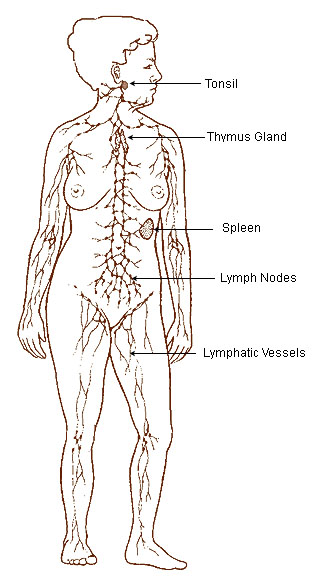
A diagram of the lymphatic system.  It consists of a network of organs, nodes, and vessels.

Have a Little Fruit

If you get hungry in between meals, the best option is a piece of fruit.  Most people are aware of the antioxidants, vitamins, and various nutrients contained in fruit.  But there are also enzymes that act as cleansing agents for the lymph system.  That is one reason fruit is used as part of a detox diet.

Practice Deep Breathing
 
It is said that he who half breathes, half lives.  As stated above, the lymphatic system is part of the circulatory system.  While there are organs involved in the production of lymph, there is no organ that is responsible for distributing it through the body.  That is done via respiration.  Deeper, stronger breaths will move the lymph more effectively.
Exercise
 
If deep breathing stimulates the lymph system, then it only stands to reason that doing the very thing that is most likely to cause deep breathing will also be beneficial.  In addition, exercise makes everything flow faster - the alimentary chain, the blood, the sweat of toxins from the body.

Skin Brushing
 
Dry skin brushing is one of the lesser known ways to stimulate the flow of your lymphatic system.  The technique on how to do it is here.  It can be done before a shower, and it only takes about three minutes to complete.
 
Contrast Temperatures in the Shower
 
For some of you, maybe for most of you, this won't exactly be the most comfortable of the options.  But it is very beneficial, and doesn't take any extra time.  You are doing it during a task that you would normally do anyway.  In the shower, alternate between hot and cold water.  As hot and as cold as you can possibly stand.  The expansion and contraction of the blood vessels will also work the lymphatic system.
 
Elevate Your Legs
 
Lay on the floor, you can use a pillow and even a mat if you'd like, in order to make it more comfortable, if your rug is not soft enough.  Place your butt very close to the wall, and lay with your legs fully elevated at or near a 90 degree angle.  Lay like this for five to ten minutes.  This posture provides maximum stimulation of the lymph in the legs.
 
Massage Yourself
 
Be sure to use light pressure, as most of your lymphatic system is in the interstitial area, directly below the skin.  The most important points to do this are in your nodal and especially the gland areas, such as in the neck, behind the ear, the spleen, which is in the area just below the sternum, and the glands in the groin area.


Wednesday, February 18, 2015

Detox Baths: Brushing is an Added Bonus for Your Body!

You've read about the health benefits of soaking in a bath with mineral salts, and have finally decided to try it.  You've read the recipes.  You know how much of each salt to use.  And then the fragrance, the essential oil...to top off the bath with a pleasant aroma with the evaporating water.

For a detox bath, most recommend doing it when you are not in a hurry to get anywhere.  About 45 minutes is needed in total for both phases of the experience.  The first half - detoxification, the second, absorption of the mineral salts.

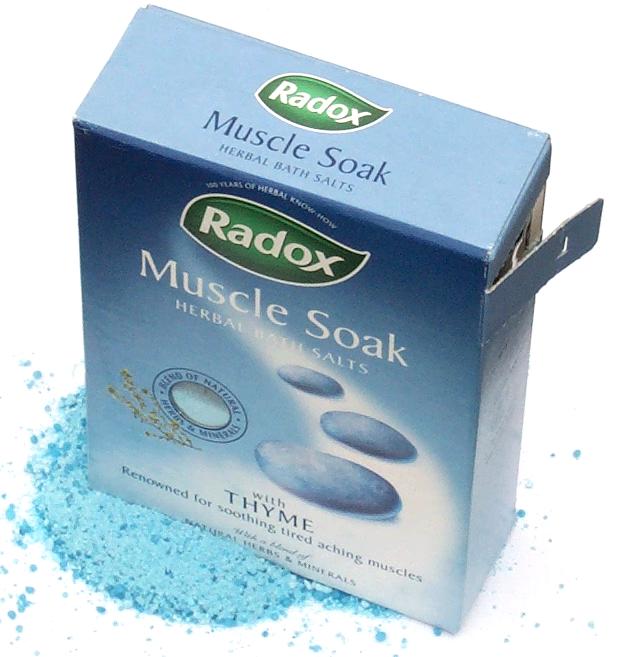
Author Simon Speed.  A prepackaged bath salt solution.

However, the Sphere of Health recommends that you allot just a little bit more time than the usual 45 minutes.  There are two additional steps that can be taken to further detox your body, giving better results than the bath alone.  These two steps are dry and wet skin brushing.

The dry skin brushing is done before you get in the bath.  A tutorial on skin brushing can be found here.  This step will exfoliate the skin, helping to clear the pores as well as possible before the bath, to achieve maximum flush and absorption.  It also stimulates the lymphatic system, facilitating outflow of the toxins.

After your bath is done, stand up slowly, and use the skin brush again in the same manner, before you dry off.  Stimulation of the lymphatic system will get available remnants out that were not released with the soaking.  Do this right away, so that the pores of your skin are still wide open and can release the maximum amount of waste.

To achieve maximum detoxification, dry brush your skin before for about three minutes before the bath, and wet brush three minutes afterwards.

Always remember, do not take a mineral salt detox bath when you are pregnant, or if you have excessively high blood pressure, kidney or heart problems.


Monday, February 9, 2015

Answers to Popular Arguments Against the Paleo and Primal Diets

Ever increasing in popularity, from high profile advocates to a growing number of books, the Paleo and Primal diets have inevitably come under attack by various competitors and detractors.  Unfortunately, many who argue against them misrepresent what they actually consist of.  Some, most likely, do it purposely, while others do it through a genuine lack of understanding of what they are.  Even in the case of the latter group, they are at best irresponsible.  It is a logical necessity that you have an accurate understanding of what you are evaluating, in order to make a fair and competent evaluation.

"But, ancient man did eat grains.  It is known that the Egyptians ate wheat and bread and drank beer."

Yes, indeed the Egyptians did indulge in all of those things.  However, the Egyptian civilization that you refer to is not Paleolithic.  You are not going back far enough.  Both the Paleo and Primal diets refer back to the Paleolithic era.  This time period spans between 2.6 million years ago up until 10,000 B.C.  That is before the ancient Egyptians.  The first humanoid species came into being approximately 2 million years ago.  The Paleolithic era accounts for about 95% of human history and diet.  The Egyptian civilization is old, however it is still part of the Neolithic era.  These diets base themselves on the types of foods humans ate before the birth of agriculture.  Bread is the result of agriculture and modern, Neolithic civilizations.  The same goes for beer.  Those two man made inventions did not exist for 95% of human history.

Eating Paleo and Primal is not good because cavemen only lived to be in their thirties, on average.

While it is true that the average lifespan for the Paleolithic man was approximately 35 years for men, and 30 for women, there are several other variables that were involved.  Before the birth of agriculture and large, complex civilizations, man banded together in much smaller groups.  Before the mass extinction at the end of the last ice age, life in the Paleolithic era was far more dangerous.  Humans, being fewer in number, were more susceptible to both predation, and being killed as a result of attempting to hunt prey.  The Paleolithic era consisted of a plethora of larger, more dangerous animals than modern times.  With fewer people, and with weaponry limited to spears and stones, people could be very badly injured or killed in the course of a hunt.

In addition, medicine was very primitive.  People could die from abscesses borne from acquired injuries or wounds.  Advancements in medicinal health care, as well as understanding of infections and the human body came with time, and larger civilizations with improved methods of communication.  The shorter life expectancy for women was most likely due to the lack of knowledge on how to deal with pregnancy or delivery complications.

Another misconception is that the lifespan gradually increased over time.  According to research by Angel, Lawrence J. (1984) "Health as a crucial factor in the changes from hunting to developed farming in the eastern Mediterranean." In: Cohen, Mark N.; Armelagos, George J. (eds.) (1984) Paleopathology at the Origins of Agriculture (proceedings of a conference held in 1982). Orlando: Academic Press. (pp. 51-73)], the lifespans of Paleolithic man were roughly equal to Neolithic man, up until the 20th century, when vast improvements of science, and the modern industrial economy took root.  There are a couple noted exceptions in the Neolithic time where the age rose into the forties, during the peaks of the ancient Greek civilization and the Roman empire, where advancements in science and good hygenic practices that were later abandoned by medieval people enabled brief rises in longevity.  This lack of advancement in longevity up until the Industrial Revolution speaks volumes when you consider that Neolithic man had the advantages of a complex society that the Paleolithic man did not.

Another thing to take into account on the chart shown in the link is the fact that Neolithic man also did not grow as tall as the Paleolithic man, and also did not have as much of a pelvic inlet depth index.  When the human diet switched to grains and bread as staples at the beginning of the Neolithic era, people shrunk in height, despite the increased abundance of food from agriculture.

"The USDA has ranked the Paleo and Primal diets one of the lowest of all."

The USDA is heavily influenced by politics.  In Washington D.C. there exists a very large and powerful grain lobby that fuels the U.S. government via subsidies.  Ever since the modern food pyramid created in the 1970's, diseases of affluence have become much more prominent.  The obesity rate is higher than ever.  The several millennia track record simply does not favor eating grains and bread as the base of your diet.

If you are curious, if you have not tried the Paleo or Primal diets, here is a highly recommended nutritional information book