Tuesday, February 24, 2015

Everyday Habits That Stimulate the Lymphatic System

The lymphatic system is one of the unsung heroes of the immune system.  It houses a large percentage of white blood cells, and acts as the main drainage system of toxins.  Eating correctly, and exercise are essential components of health, but most people, at least to some degree, ignore their lymphatic system, and thus are not completely maximizing their immune system.

In addition to ridding the body of toxins, the lymphatic system is a component of the circulatory system, aiding it in processing blood, and the interstitial plasma back to the blood that has been filtered.

As covered in a previous article, one of the most thorough activities you can do to stimulate the lymphatic system and aid in its detoxification capabilities is to take a mineral salt bath.  However, that is not an everyday activity.  There are short, daily things you can do to help keep it functioning at an optimal level.
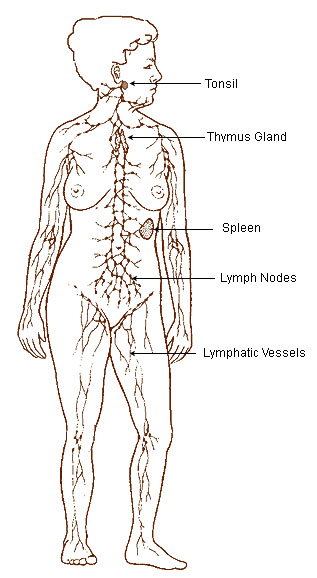
A diagram of the lymphatic system.  It consists of a network of organs, nodes, and vessels.

Have a Little Fruit

If you get hungry in between meals, the best option is a piece of fruit.  Most people are aware of the antioxidants, vitamins, and various nutrients contained in fruit.  But there are also enzymes that act as cleansing agents for the lymph system.  That is one reason fruit is used as part of a detox diet.

Practice Deep Breathing
 
It is said that he who half breathes, half lives.  As stated above, the lymphatic system is part of the circulatory system.  While there are organs involved in the production of lymph, there is no organ that is responsible for distributing it through the body.  That is done via respiration.  Deeper, stronger breaths will move the lymph more effectively.
Exercise
 
If deep breathing stimulates the lymph system, then it only stands to reason that doing the very thing that is most likely to cause deep breathing will also be beneficial.  In addition, exercise makes everything flow faster - the alimentary chain, the blood, the sweat of toxins from the body.

Skin Brushing
 
Dry skin brushing is one of the lesser known ways to stimulate the flow of your lymphatic system.  The technique on how to do it is here.  It can be done before a shower, and it only takes about three minutes to complete.
 
Contrast Temperatures in the Shower
 
For some of you, maybe for most of you, this won't exactly be the most comfortable of the options.  But it is very beneficial, and doesn't take any extra time.  You are doing it during a task that you would normally do anyway.  In the shower, alternate between hot and cold water.  As hot and as cold as you can possibly stand.  The expansion and contraction of the blood vessels will also work the lymphatic system.
 
Elevate Your Legs
 
Lay on the floor, you can use a pillow and even a mat if you'd like, in order to make it more comfortable, if your rug is not soft enough.  Place your butt very close to the wall, and lay with your legs fully elevated at or near a 90 degree angle.  Lay like this for five to ten minutes.  This posture provides maximum stimulation of the lymph in the legs.
 
Massage Yourself
 
Be sure to use light pressure, as most of your lymphatic system is in the interstitial area, directly below the skin.  The most important points to do this are in your nodal and especially the gland areas, such as in the neck, behind the ear, the spleen, which is in the area just below the sternum, and the glands in the groin area.


Wednesday, February 18, 2015

Detox Baths: Brushing is an Added Bonus for Your Body!

You've read about the health benefits of soaking in a bath with mineral salts, and have finally decided to try it.  You've read the recipes.  You know how much of each salt to use.  And then the fragrance, the essential oil...to top off the bath with a pleasant aroma with the evaporating water.

For a detox bath, most recommend doing it when you are not in a hurry to get anywhere.  About 45 minutes is needed in total for both phases of the experience.  The first half - detoxification, the second, absorption of the mineral salts.

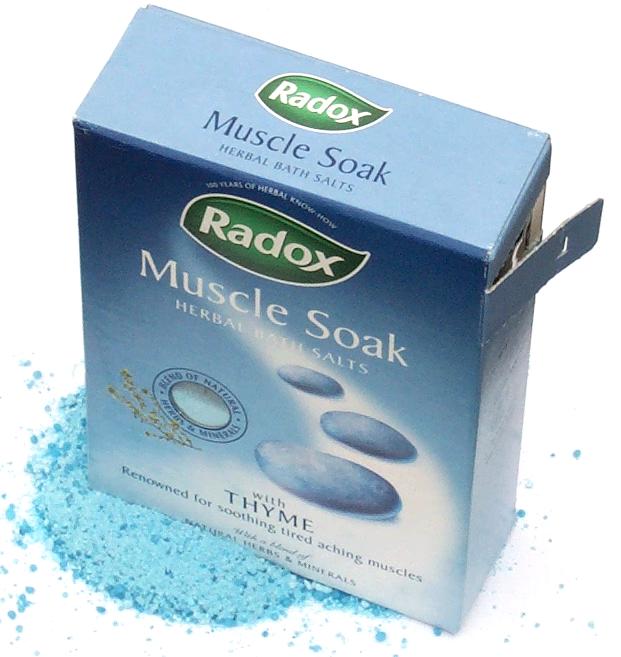
Author Simon Speed.  A prepackaged bath salt solution.

However, the Sphere of Health recommends that you allot just a little bit more time than the usual 45 minutes.  There are two additional steps that can be taken to further detox your body, giving better results than the bath alone.  These two steps are dry and wet skin brushing.

The dry skin brushing is done before you get in the bath.  A tutorial on skin brushing can be found here.  This step will exfoliate the skin, helping to clear the pores as well as possible before the bath, to achieve maximum flush and absorption.  It also stimulates the lymphatic system, facilitating outflow of the toxins.

After your bath is done, stand up slowly, and use the skin brush again in the same manner, before you dry off.  Stimulation of the lymphatic system will get available remnants out that were not released with the soaking.  Do this right away, so that the pores of your skin are still wide open and can release the maximum amount of waste.

To achieve maximum detoxification, dry brush your skin before for about three minutes before the bath, and wet brush three minutes afterwards.

Always remember, do not take a mineral salt detox bath when you are pregnant, or if you have excessively high blood pressure, kidney or heart problems.


Monday, February 9, 2015

Answers to Popular Arguments Against the Paleo and Primal Diets

Ever increasing in popularity, from high profile advocates to a growing number of books, the Paleo and Primal diets have inevitably come under attack by various competitors and detractors.  Unfortunately, many who argue against them misrepresent what they actually consist of.  Some, most likely, do it purposely, while others do it through a genuine lack of understanding of what they are.  Even in the case of the latter group, they are at best irresponsible.  It is a logical necessity that you have an accurate understanding of what you are evaluating, in order to make a fair and competent evaluation.

"But, ancient man did eat grains.  It is known that the Egyptians ate wheat and bread and drank beer."

Yes, indeed the Egyptians did indulge in all of those things.  However, the Egyptian civilization that you refer to is not Paleolithic.  You are not going back far enough.  Both the Paleo and Primal diets refer back to the Paleolithic era.  This time period spans between 2.6 million years ago up until 10,000 B.C.  That is before the ancient Egyptians.  The first humanoid species came into being approximately 2 million years ago.  The Paleolithic era accounts for about 95% of human history and diet.  The Egyptian civilization is old, however it is still part of the Neolithic era.  These diets base themselves on the types of foods humans ate before the birth of agriculture.  Bread is the result of agriculture and modern, Neolithic civilizations.  The same goes for beer.  Those two man made inventions did not exist for 95% of human history.

Eating Paleo and Primal is not good because cavemen only lived to be in their thirties, on average.

While it is true that the average lifespan for the Paleolithic man was approximately 35 years for men, and 30 for women, there are several other variables that were involved.  Before the birth of agriculture and large, complex civilizations, man banded together in much smaller groups.  Before the mass extinction at the end of the last ice age, life in the Paleolithic era was far more dangerous.  Humans, being fewer in number, were more susceptible to both predation, and being killed as a result of attempting to hunt prey.  The Paleolithic era consisted of a plethora of larger, more dangerous animals than modern times.  With fewer people, and with weaponry limited to spears and stones, people could be very badly injured or killed in the course of a hunt.

In addition, medicine was very primitive.  People could die from abscesses borne from acquired injuries or wounds.  Advancements in medicinal health care, as well as understanding of infections and the human body came with time, and larger civilizations with improved methods of communication.  The shorter life expectancy for women was most likely due to the lack of knowledge on how to deal with pregnancy or delivery complications.

Another misconception is that the lifespan gradually increased over time.  According to research by Angel, Lawrence J. (1984) "Health as a crucial factor in the changes from hunting to developed farming in the eastern Mediterranean." In: Cohen, Mark N.; Armelagos, George J. (eds.) (1984) Paleopathology at the Origins of Agriculture (proceedings of a conference held in 1982). Orlando: Academic Press. (pp. 51-73)], the lifespans of Paleolithic man were roughly equal to Neolithic man, up until the 20th century, when vast improvements of science, and the modern industrial economy took root.  There are a couple noted exceptions in the Neolithic time where the age rose into the forties, during the peaks of the ancient Greek civilization and the Roman empire, where advancements in science and good hygenic practices that were later abandoned by medieval people enabled brief rises in longevity.  This lack of advancement in longevity up until the Industrial Revolution speaks volumes when you consider that Neolithic man had the advantages of a complex society that the Paleolithic man did not.

Another thing to take into account on the chart shown in the link is the fact that Neolithic man also did not grow as tall as the Paleolithic man, and also did not have as much of a pelvic inlet depth index.  When the human diet switched to grains and bread as staples at the beginning of the Neolithic era, people shrunk in height, despite the increased abundance of food from agriculture.

"The USDA has ranked the Paleo and Primal diets one of the lowest of all."

The USDA is heavily influenced by politics.  In Washington D.C. there exists a very large and powerful grain lobby that fuels the U.S. government via subsidies.  Ever since the modern food pyramid created in the 1970's, diseases of affluence have become much more prominent.  The obesity rate is higher than ever.  The several millennia track record simply does not favor eating grains and bread as the base of your diet.

If you are curious, if you have not tried the Paleo or Primal diets, here is a highly recommended nutritional information book. 

Friday, January 30, 2015

Ways to Reduce Skin Chapping in Winter You May Not Know About

In the heart of winter, you are at the highest risk for chapping skin.  If you asked most people why this is, they would most likely tell you that the exposure to the cold and wind outside is the culprit.  That answer is true, however, it does not tell the whole story.  The truth is your skin is under assault from both the outside and the inside.  Excessively cold air is the enemy of your skin, but what many do not realize is, the central heating that you use during the winter is also an antagonist.  The heater is your friend for many reasons, but one of its drawbacks is that it makes the air inside dryer.  Moving from cold and wet to warm and dry can wreak the havoc of redness and soreness on exposed skin.

Other causes of chapped skin can be excessive use of soap, and some cosmetics that have a high basic pH can have a drying effect on the skin, stripping it of the oils.  Constantly wearing clothes that are too tight can contribute to chapping via constant friction.

Evening primrose.  Oil that is made from this plant can be used to treat chapped skin.
Author: Charles de Mille-Isles from Mille-Isles, Canada, under the Creative Commons Attribution 2.0 Generic license.


Raise the Humidity of Your Home

As stated above, central heating has the unwanted effect of taking a lot of the moisture out of the internal air.  An obvious remedy for this is to use a humidifier.  If you don't have a humidifier and you are suffering from chapped skin, an alternative solution is to place bowls of water near the heating vents in your house until you are willing and able to purchase one.

Evening Primrose Oil

The evening primrose plant has a long history in naturopathic and alternative medicine.  Primrose oil contains a type of essential Omega-6 fatty acid.  If you have chapped skin, the recommended dosage is 1500 mg, split up into 500 mg three times daily until the chapping subsides.  This should not be done as a preventive measure; only take this treatment if your skin is chapped.  This is due to the fact that it is Omega-6, and taking it long term can put an excess of Omega-6 in your body, upsetting the idea Omega-3 to 6 ratio.

There are a few potential risks of primrose oil if you have certain preexisting conditions.  It potentially can heighten risk of nausea and seizures for anyone taking phenothiazines. These are used to treat some conditions of psychosis such as schizophrenia.  For those who take antiplatelets and anticoagulant medicine, it may heighten the risk of bleeding.  Also, if you have excessively low blood pressure, you should be careful with evening primrose.

For those with no preexisting conditions, there have been occasional incidents of headaches or nausea.  However, these are very uncommon.

Herbal Remedies

A topical application for chapped skin is oil from the calendula plant.  Calendula ointment is also used to treat inflamed hemorrhoids, varicose veins, nosebleeds, and some other wounds which have trouble healing.

St. John's wort, or Hypericum perforatum is used to treat a wide variety of conditions, including depression.  It also is an antioxidant which contains anti-inflammatory properties.  Depending on the condition, it can be taken orally or topically.  For chapped skin, use the latter.  The best time to apply it on the skin is immediately after a bath or shower.

Sunday, January 25, 2015

The Health Risks of Sleeping Pills

Sleeping problems can occur for many reasons.  Among them are stress, a poor diet or eating schedule, excessive caffeine intake, or even loss of time tracking when you are deeply concentrated on an activity of interest.  In an attempt to alleviate this problem, millions of people have resorted to the consumption of sleeping pills.  Many of these sleeping pills belong to a class of drugs called benzodiazepines, while others are diphenhydramine based.  Their potential for harm is multifaceted, while they do little, if any, good.

How Do Sleeping Pills Work?

Sleeping pills work to amplify the effect of GABA, which is a neurotransmitter.  This increased effect results in the person feeling sedated, as well has their muscles relaxing.  Sometimes, they may even have the feeling of dissociation; they feel detached from their relative surroundings.

Tylenol PM, a common over the counter diphenhydramine sleeping pill.  Author: Damian Finol, under the Creative Commons Attribution-Share Alike 3.0 Unported license.


Sleeping Pills Alter Brain Activity During Sleep

The obvious reason behind taking sleeping pills is to counteract loss of sleep due to insomnia.  However, research continuously shows that in addition to many other side effects, these drugs do not even yield the desired effect.  While they put you to sleep, it is not quality sleep.  Rather, they mask your underlying sleep problems by making you drowsy.  There are two main stages of sleep, REM and non-REM.  One phase of non-REM sleep is slow wave sleep.  These drugs inhibit the brain's ability to actually rest and consolidate during both slow wave and REM sleep.  Slow wave sleep is when your brain cements what you have learned through the day into its short term and long term memory banks.  This is the reason that pulling an all-nighter before an exam usually does not work.

Your Body Builds a Tolerance

Taken long term, sleeping pills tend to lose their effectiveness at the same dose.  Therefore, in order for them to put you to sleep, you will need to take more of them.  Some actually reach the point where they are unable to fall asleep without them.  Much like narcotics such as cocaine, it creates a greater dependency as time goes on.

Daytime Dysfunction

Because these drugs severely impact the quality of your sleep, impairing the brain's restorative ability, you are very likely to develop chronic fatigue during the day.  You will experience daytime drowsiness.  This also tends to affect your mood in the way of irritability that is common with people who are tired.

Affectations of Memory

This is a consequence of the alterations of brain activity and the reduced quality of both slow wave and REM sleep.  Because this is the period where your brain strengthens both its short and long term memory, long term usage can result in the loss of both types of that memory.  This can, in some cases, be severe enough that it mimics the symptoms of early stage dementia.

Cancer and Mortality

Research by Daniel Kripke, M.D. claims that sleeping pills actually raise the risk of cancer and death of all causes.  These trials were conducted out of the University of California, where Kripke is an emeritus professor.  He has done several research projects since the 1970's in relation to the dangers of sleeping pills.  In the most recent study, conducted over a five year period between 2002-2007, the death rate of all cause mortality was five times higher among pill users.

Melatonin

Melatonin is a natural hormone that is produced to help guide your circadian rhythm.  It is also a quite potent antioxidant.  This can be a quite favorable alternative than the synthetic benzodiazepines or diphenhydramine.  However, even with taking encapsulated melatonin, there are risks.  Taking an excess of melatonin, or taking it for too long of a period of time, carries many risks.  Follow the guidelines listed in this article about melatonin.  In particular, pay attention to the dosage recommendation, and if the capsules you purchase are not time released, break them up into the recommended fractions, instead of taking the whole pill.  Most whole capsules contain a lot more than is actually needed.

Monday, January 19, 2015

Five Great Brands of Dark Chocolate

Late last month, the Sphere of Health wrote about the many health benefits found in dark chocolate.  Cacao contains a wide variety of antioxidants, as well as essential trace minerals and elements that are necessary for optimizing your health.  The darker the chocolate - the higher percentage of cacao, generally the greater the benefits.  One caveat to this is that when the cacao content gets up into the 75+ percent range, some people find that to be too bitter for their tastes.  Very dark chocolate can sometimes be an acquired taste.  Though, once acquired, there are few things more delectable to the taste buds.  If you have difficulty with the bitterness, you can gradually build up your taste by following the directions in this hubpage article.

An assortment of chocolate bars of varying cacao.  If your tongue is not yet acclimated to handle at least 70% cacao, scaling up by using the slightly less dark would be an effective way to gradually build up your taste.
Author Gaƫl Chardon, under the license (CC BY-SA 2.0)
Source http://www.flickr.com/photos/26294314@N00/5539879732/
Michel Cluizel
This French company started out as a pastry business that expanded and evolved into chocolate.  Highly regarded worldwide as one of the exceptional gourmet brands, it has been around for over 60 years.  They leave out the lecithin in their recipe.  This affects the texture to make it slightly pasty.  But it also feels very smooth in the mouth, and is exceptionally rich.  They have a wide variety of flavors.

Valrhona
This company has been around since 1922, founded in France just south of Lyon.  Their chocolate and cocoa are used in high end restaurants, including Michelin starred ones, and for good reason.  Their chocolate is considerably less bitter than many other brands at the same cacao content.  It fills your mouth with a rich, creamy sensation.

Dolfin

This is a Belgian brand that has bars with a varying range of cacao content.  They also have a very wide selection of bars that have added fruit or spice flavor to them.
Amedei 

Located in Italy, in the region of Tuscany, this company's chocolate bars have won numerous awards over the years.  The bars are of single origin, meaning the chocolate from each product is made from only one type of bean from one region.  They do not blend the cocoa beans from various regions in one product.  The downside to Amedei is that most of their bars are quite expensive.  One particular product, Amedei Porcelana, is the world's priciest.  While you will probably enjoy this brand in moderation, you will definitely get everything you paid for when you do.

Guittard

Founded in the 1850's, this American chocolate company has stood a long test of time.  Their chocolate is coverture, using extra cocoa butter.  It gives the product a very creamy flavor.  Established by a French immigrant, Etienne Guittard, the chocolate is tempered and prepared using French methods.

Saturday, January 17, 2015

The Versatile Weight Vest - Advantages and Safety

Today, many people are participating in exercise programs that utilize plyometrics and body weight exercises. Plyometrics are useful for building power and speed, while progressive resistance training builds strength.  Proponents of these programs claim that they yield superior functional power and strength to specific activities such as running, jumping, boxing, etc.

Depending on your goals and abilities, a problem with this program is that you can advance past the point where your body weight can increase your strength or speed performance. For instance, if you are able to do 30 pushups, and your goal is to get stronger, being able to do more than 30 is only going to marginally improve your strength.  Pushups after that number is an endurance exercise at that point.  Those who wish to use these exercises rather than pushing and pulling barbells, dumbells, and kettlebells will eventually need more outside weight if they are not gaining sufficient muscular weight to continue to give them a challenge in an optimal range of repetitions for increasing strength or speed.  One piece of equipment that will do just that is the weight vest.  They have become very popular, and for good reason.

Plyometrics is a type of exercise where a weight vest can be used for the intermediate to advanced trainer.


The first thing is, if you are doing exercises that involve joint impact such as plyometrics or running, when you first start to add weight via a suit, add very slowly. Start out with only four or five percent of your body weight.  Add only in five pound increments as your progress, staying at the same weight for at least a few weeks.  Reason being, impact power training is different than weightlifting. Even if you are strong for your size, plyometrics and running require advanced conditioning of the joints. Your joints may be conditioned to hold 400-500 pounds on your back for a set of squats.  That does not mean you will be able to safely walk for miles with 100 added pounds. Your muscles may be strong enough, but your joints acclimate slower.

Second, as you advance to using heavy weight, be sure you add no more than you can use walking with proper posture.  Substantial extra weight on your body with poor posture is a recipe for both acute and chronic back injuries.

Fasten your vest properly.  It should be fixed tightly enough to your body that it will not bounce or rub. Bouncing can cause bruising, while chronic rubbing can lead to a rash, or perhaps even lacerations.

Weight vests can be adjustable or non-adjustable.  The Sphere of Health highly recommends getting the adjustable types, unless you're certain that your goals are very modest.  If you progress, and intend to advance as far as you can, you will eventually outgrow the weight you are using, and will need more.

Train hard, and train safe!