Monday, April 27, 2015

Choline: Another Reason to Eat Eggs

What is Choline?

A little talked about nutrient, choline has many chemical structural similarities to those in the Vitamin B group.  However, it is not officially classified as one of them.  Like B Vitamins, it is water soluble, and has similar absorption pathologies.  It has a basic pH, and its IUPAC name is 2-Hydroxy-N,N,N-trimethylethanamonium  It is also known as bilineurine.  When choline is absorbed into your body, some of it is seized by neurons that contain the enzyme that is known as choline acetyltransferase.  These neurons convert it into the ester acetylcholine.

The human body is capable of synthesizing choline, however, it cannot make nearly enough on its own.  It is an absolute must that you ingest enough through your diet and/or supplementation.

Eggs, among other reasons, are tremendously beneficial to your health because they are one of the most choline rich foods in existence.

Functions of Choline

Choline has three main functions, all of which are at the critical level for life, and quality of life.  Choline helps maintain the structural integrity of cell membranes.  Without adequate choline, any wound or injury you have will take much longer to heal.  Your immune system will be weakened, and your energy levels would decrease.  You may also experience poor digestion and gastrointestinal symptoms.

The second function of choline is brain functionality and health.  Choline deficiencies increase your risk of dementia, decreases your ability to learn, and has an adverse effect on your memory.  Therefore, getting enough choline is even more important in the very young, when the brains are developing, and in the very old, when the brain is more susceptible to conditions of senility and dementia related diseases.

The third function, alluded to above, is the synthesis of acetylcholine, one of the chief neurotransmitters in the brain and body.

In addition to the complications described above, choline deficiency also will place you at higher risk for hardening of the arteries, liver disease, and some neurological disorders, due to the consequential shortage of acetylcholine.

Eggs

One egg yolk contains over a quarter of the recommended daily intake of choline.  If you eat just two eggs a day, you are halfway to your recommended daily intake.  Remember, the choline is contained within the yolk, so eat the entire egg, not just the egg white.  If you do not like the taste of eggs, but wish to gain from their many nutritional benefits an alternative is to mix powdered egg in water, or in a berry smoothie.

Most choline rich foods are from animal sources, so if you are a vegetarian or vegan, choline supplements are available at reasonable prices in the form of capsules or powder.  If you are an endurance athlete, or drink a lot of alcohol, you are at higher risk for choline deficiency.  It is also important for pregnant women.  Due to the fact that choline is essential for proper brain development and cells, choline deficiency can have an adverse effect on the fetus.  These supplements may come in handy in addition to your diet, since there is a higher probability that you may not be getting enough from your regular diet.

Tuesday, April 21, 2015

Things Your Massage Therapist May Discover

When you call your local spa to make an appointment for a massage, you may have its obvious benefits running through your mind.  The destressing aspect, the stimulation of blood flow, the working out of muscle tightness.  Maybe you are even thinking of the detoxing effects, or the increased activation of your lymphatic system.  But, the massage you are about to get can often reveal much more than you anticipated.  A doctor's checkup is normally once a year, to catch problems before they become worse, or potential problems before they become present.  A periodic trip to the spa for a massage throughout the year can catch some of them even earlier.  While massage therapists do not do blood work, there are several problems that can be caught by feel.

Your massage therapist may find unexpected problems in between your annual checkups, in addition to giving you a relaxing experience.
 http://commons.wikimedia.org/wiki/File:Ayurvedic_Massage_1.jpg
 
Cancer
 
One of the main problems with many cancers are they are painless and show no symptoms in early stages.  Therefore, you may have skin dysplasia in areas that are hard for you to see, or lumps that you have not detected by feel.  Generally, malignant lumps are hard to the touch.  During the kneading of your limbs and torso, a perceptive massage therapist may notice these abnormalities and tell you to get them checked out.  Many a therapist has discovered an abnormality in the abdominal area, or a painless skin lesion, which resulted in a life saved.

Habitual Poor Posture
 
Yes, most of us spend some time during the day sitting.  Those who have desk and computer jobs typically sit quite a bit.  We tend to lose sight and not think about how we are sitting.  Think back to when you were a child, and didn't realize you were slouching until your mom or dad alerted you to the fact.   As adults, we become concentrated on our work, maybe the small print on the screen is causing us to peer more towards it, and we do not realize that we are slouching.  If we don't pay attention, we can do this every day.  Chronic slouching can lead to spine and ligament damage, neck problems, and poor digestion.  The massage therapist may alert you to this fact by detection of misaligned hips due to habitual leg crossing, or tightness in the lower back from slouching.  You may have become accustomed to dull pain to the point of not realizing the problem, until the tightness is worked out in the massage.  This improved feeling can serve as a reminder to think about your posture when you are sitting.

Time for New Sleeping Gear
 
When you sleep on the same pillow and in the same bed every day for years, you often don't notice the wear, because it happens so slowly.  A mattress can have a life of anywhere between 7 - 20+ years, depending on type, brand, quality, and the weight of the person or people that use it.  If you are coming in to the spa because you are dealing with long term neck stiffness, or back pain with no obvious injury, they may find strains characteristic of poor sleeping support.

Upper Back or Shoulder Pain Due to Chronic Texting
 
When people text, they tend to hold their phone down low and hunch themselves over, especially if they are sitting down in a chair with no table in front of them.  When you are looking down for a long period of time, you tend to round your shoulders and upper spine.  The upper spine is following the path of the neck.  If this is the case with you, hold your phone up higher when texting, and as always, be mindful of your posture.


Monday, April 13, 2015

Chlorophyll - It Does More Than Color Plants

Most people have at least a passing awareness of the molecule known as chlorophyll.  They know it is contained in plants, and gives the leaves their green color.  Considerably less know that without chlorophyll, much of the current life on Earth would not survive.  Chlorophyll is critical in the process of photosynthesis, which allows plants to help maintain the oxygen levels in Earth's atmosphere.  Without chlorophyll, plant life would not be possible.  And animals, including humans, who have an environmental symbiosis with plants - our bodies have adapted to the current atmospheric content - would also disappear.

However, in addition to making life as we know it possible, chlorophyll also has another use for people.  This critical molecule not only helps to sustain people, it can improve your health via detoxification.

Chlorophyll-A.  The most common form of the chlorophyll molecule.
Chlorophyll has an exceptional ability to bind to toxic heavy metals.  It does the same to free radicals, converting them to a neutral compound.   In various places on the internet, you will read about detox via juice fasting.  The Sphere of Health does not endorse juice fasting - going for days without solid food and drinking only a blended, pureed concoction of chlorophyll rich foods, along with supplemental teas or tisanes, or oils.  Among other reasons, the shock of the calorie crash over a period of days can put your system in an extreme metabolic slowdown known as starvation mode.  To detox, you can make a chlorophyll rich smoothie juice, just do not make it your only food consumption for several days!

To preface, the Sphere of Health recommends you eat a diet that is high in leafy green vegetables to get more chlorophyll in your diet, if you are not doing so already.  To do a three day detox, with consumption of extra chlorophyll, the best way to do it is with an extra amount of these chlorophyll rich vegetables.  In general, when it comes to leafy greens, the darker the green, the higher the chlorophyll content.  Kale is one that should be included in the mixture.  Spinach, collards, or if you like spice, mustard greens would be a good option.  But one of the foods with the highest chlorophyll content is wheat grass.  It is recommended by any advocate of a chlorophyll detox procedure.  Two other highly touted components would be blue-green algae and spirulina.  Over a three to five day period, drink three servings of these concoctions in addition to a well balanced diet.  Here is an example of a sample recipe. 

We all will have days, where either our willpower is low, or busy circumstances, or we just want to treat ourselves due to an occasion or vacation.  In that case, if you are not going to get the adequate chlorophyll in your system on a particular day, or maybe even a string of days, for whatever reason, there are chlorophyll supplements available. 


Sunday, April 5, 2015

Another Dietician Gets it Wrong About the Paleo Diet

Recently, Samantha Heller, a registered dietician frequently seen in the media, issued a condemnation of the Paleo diet in a video on Business Insider.  The video can be seen here.  The Sphere of Health would like to take this opportunity to issue a rebuttal and refutation.

In order to draw a conclusion on the merits of a particular diet, or the merit of any issue, it is very irresponsible to do so without understanding it.  Many dieticians, either as a result of ignorance, or dishonesty, or in some cases, maybe a mixture of both, have condemned the Paleo diet on the grounds of what it is not, rather than what it is.  To a large extent, that is exactly what has been done in the video above.  The only two points that Samantha Heller got right when describing the diet is the theory behind it, that we should eat what our Paleolithic ancestors ate, and the fact that it excludes grains.  To an extent, she is right in that wine is allowed.  Wine, however, is not universally accepted by every Paleo advocate.  The reasoning behind wine is covered thoroughly in this link.  Every other aspect she listed was fallacious.  They will be covered point by point below.  This article will only cover the misrepresentations.  The merit of excluding grains, the theoretical axiom, will be reserved for another time.

This is a Paleo compliant meal, containing primarily plant food and no red meat.


"The Paleo diet is high in meat."

No.  Not necessarily.  There is no one exact composition of the allowable foods.  There are only very rough approximations.  While the Paleo diet is rigid in its exclusion of certain foods, it is rather loose when it comes to combinations of the three macronutrients of proteins, carbohydrates, and fats.  A meal of a 10 oz. steak, with 3 oz. of avocado, and 4 oz. of assorted vegetables is a Paleo meal.  However, a 6 oz. steak with 5 oz. of avocado and 6 oz. of assorted vegetables is also a Paleo meal.  Data that was collected from 229 hunter-gatherer communities listed a variance of anywhere between 28-58% fat intake.

"The Paleo diet is high in processed meat."

That is perhaps her most ridiculous claim of all.  "Processed" is a figurative four letter word in the Paleo community.  The exclusion of chemically processed food from your diet is one of the most, if not the most stressed rule of the Paleo diet.  Detractors of the diet may bring up bacon and sausage, however, there are two distinct differences.
  • First, it should be noted that there is a disagreement within the Paleo community.  Bacon and sausage are not universally accepted by everyone.
  • There is a major difference between the simple curing of meat, and what takes place during the procedure of typical commercially processed meat such as bologna and other cold cuts.  For those on the Paleo diet who eat bacon and sausage, they recognize that not all sausage and all bacon are created equal.  For instance, a sample recipe for organic, uncured bacon would be pork belly, pepper, sea salt, and maybe a few other spices.  Contrast that with this recipe of Oscar Meyer bologna:  Mechanically Separated Chicken, Pork, Water, Corn Syrup, Contains Less Than 2% Of Salt, Sodium Lactate, Flavor, Sodium Phosphates, Autolyzed Yeast, Sodium Diacetate, Sodium Erythorbate (Made From Sugar), Sodium Nitrite, Dextrose, Extractives Of Paprika, Potassium Phosphate, Sugar, Potassium Chloride. 
 All of the ingredients of the bacon are Paleo compliant.  They are naturally occurring, ancestrally eaten, and nutritionally packed.  The bologna contains several artificial chemicals that are absolutely forbidden under any and every criteria that Paleo followers have.  You can read here further for a more elaborate explanation. 

"The Paleo diet is high in red meat."

Again, no, not necessarily.  Referencing the first point, if a Paleo compliant diet is not required to be high in meat, period, then it definitely is not required to be high in red meat.  Of course, some consumption of red meat is absolutely recommended, however it does not need to be your primary source of meat.  One major tenet of the Paleolithic diet is variety.  There is nutritional synergism in variety.  You should eat a variety of vegetables - not just an abundance of one or two.  You should eat a variety of fruits, mainly different types of berries with a sparser amount of fleshy fruits.  And, conversely, you should eat a variety of meat - red meat, chicken, turkey, fish, and other seafood.  Organ meat is also recommended.

In Addition

It is important to realize that the Paleo diet is not an exact reenactment.  A complete exact reenactment is not possible.  There was a mass extinction at the end of the last Ice Age, and there are no doubt many animals that were hunted before that are no longer available.  There are some types of fruits and vegetables that are more readily available now with the spread of humans, trade, and commerce.  However, though the balance of fruits and vegetables that are readily available may be different, and some the types of meats available today may be different, they still share the same types of nutrients and general brand of genetic code that makes them compatible with our systems that evolved over a period of two million years.  The pushing of grains, bread, and cereals to the base of the modern American food pyramid has resulted in obesity, along with many diseases of affluence.

Monday, March 30, 2015

Immunotherapy Advances Again: Lifespan Increased for Leukemia, Ovarian Cancers

The realm of immunotherapy has to do with the stimulation of the body's own immune system, or giving it a "boosting power", to treat a disease.  This departs from the conventional direct attack with a medication.  There are also other types of immunotherapy that are known as immunosuppression, such as drugs given to assist the body in not rejecting a transplanted organ that its immune system may recognize as a foreign invader, rather than an essential item.  Here, however, we will focus on activation immunotherapy, and its recent advancement against specific cancers.

The beginnings of immunotherapy actually arose in the 19th century when Dr. William Coley raised a culture of aggressive bacteria and injected it into the tumors of cancer patients.  Though he had success in his trial, he and other physicians were not able to duplicate the results.  Thus, immunotherapy, while never having gone away completely, was mostly shunned in favor of chemotherapy drugs and radiation.  A probable reason for the subsequent failures, it has been thought, is due to the fact that cancer is heterogeneous in nature, and even the same type can react very differently from patient to patient.  Thus, there need to be many more species of bacteria and viruses utilized for strengths and limitations in various cancers.

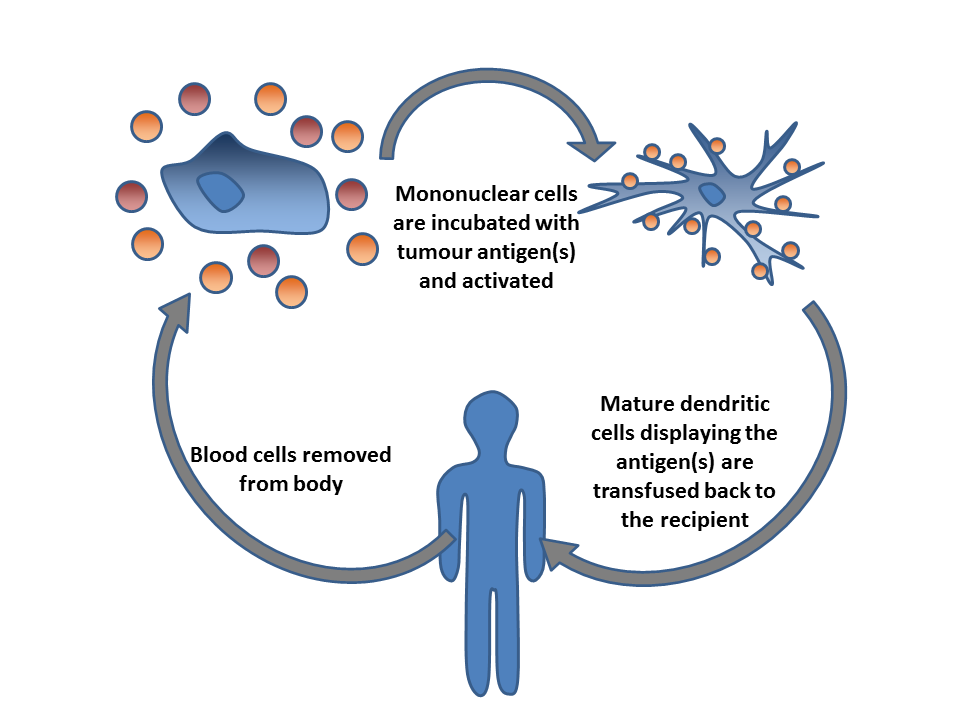
A three stage cyclic approach to immunotherapy with dendritic cells.
http://commons.wikimedia.org/wiki/File:Dendritic_cell_therapy.png
 
 Immunotherapy became slightly resurgent in the latter half of the 20th century with Interleukin.  Now, after the turn of the 21st century, more and more research centers are delving in to this previously fringe treatment that has the potential to surpass chemotherapy.

Recent trials with an immunotherapy called CAR T-cell therapy yielded a considerable breakthrough.  CAR stands for Chimeric Antigen Receptor, which are engineered to graft coding onto T-cells.  An obstacle to the body's ability to kill cancer is that cancer cells share a lot of the same DNA and traits as normal cells, so the immune system in its raw state has a hard time telling the difference and knowing which cells to attack and which to leave alone.  The CAR's boost the ability of the T-cells to distinguish between a cancer cell and a normal cell.  Trials, which began to report results in the latter half of 2014, was conducted on patients with acute lymphoblastic (ALL) leukemia.  Out of 100 patients, 70 have gone into complete remission 
 
A similar encouraging report was given by Texas Oncology, P.A. in a Phase II trial in process for ovarian cancer.  The patients that received the immunotherapy treatment have yet to have a recurrence of their cancer as of the end of March, 2015.  The patients that received the standard treatment had a recurrence at a median of 14.5 months.

In the months and years to come, the Sphere of Health will keep you updated on the progression of this old, but new realm of cancer treatment.  The moderating of oncolytic viruses, especially, has branched out in recent years, as we turn our enemy into an ally.  Bacteria and viruses that are usually thought of as hostile are going to be used to kill a body's greatest self manufactured enemy - cancer. 

Friday, March 20, 2015

Bacon: Healthy or Not?

When talking about food, a phrase rarely heard is, "I hate bacon".  And for good reason.  Its rich, fatty, salty taste, with a smoky or maple flavor usually added, rightfully earns its nickname of "meat candy".  As much as its taste is lauded, however, it is often paired with the same amount of nutritional concerns.  Ask the average person how healthy they think bacon is, and they will answer in the negative almost as certainly as they will answer in the positive about its flavor.  So, is bacon really as unhealthy as it is believed to be?

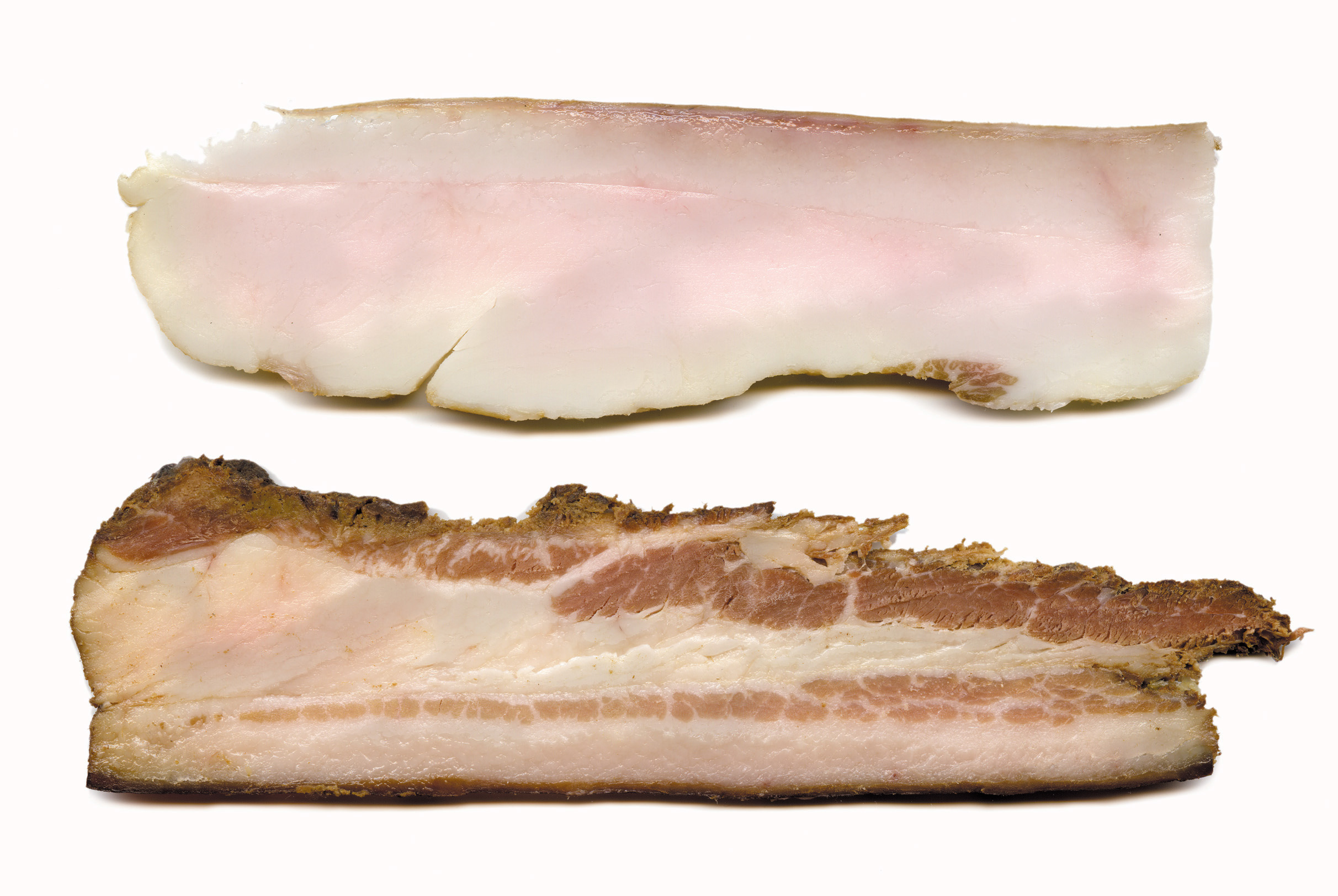
Two bacon strips.  The top, from the back.  Bottom, from the belly.
The short answer is: it depends on the bacon.  Contrary to popular belief, not all bacon is unhealthy.  There are two main deciding factors: the source of the animal, and the processing.  Also, contrary to another popular belief, the bacon that is unhealthy is not unhealthy due to the fact that it is fatty.  Fats are an important component of a healthy diet.
 In the United States, bacon is almost always made from pork belly.  In other countries, it is often from the side or the back.  Pork belly, of course, has a comparatively higher fat and lower protein content than the other parts.  Despite this, by volume, even fattier cuts of bacon contain significant protein.  Because it is pork, it is laden with the various Vitamin B molecules - 1, 2, 3, 6, and 12.  It is very high in selenium, phosphorus, potassium, and zinc - four essential trace elements.

Now, for the downsides to bacon.  Most of it is also extremely high in sodium.  Evident in its taste, it is heavily salted as part of its curing process.  As for much of the sourcing of it, most bacon you see at the majority of supermarkets in the United States are from factory farms.  It has come from pigs that were primarily grain fed, raised in a sedentary environment, and have been given hormones and various antibiotics.

During the processing of most factory farmed bacon, the meat is typically treated with phosphates, as well as sodium compounds such as sodium ascorbate. It is not bacon itself, but a lot of the chemicals and substandard sources that create these caveats, not bacon in and of itself.

Find a good source for your bacon, such as at a local farmer's market, or at a food store where it is well sourced; where the pigs have not been treated with hormones or antibiotics, and have ideally had a free range environment.  Pay careful attention to the other ingredients listed.  Make sure it is not full of many of the typical additives that are common in commercial bacon.  Pederson's Natural Farms is an example of a good quality bacon.

After you have found a good source, you can eat it by itself, or add it to various recipes!

Thursday, March 12, 2015

Leg Press: A Good (Auxiliary) Exercise (If Done Properly)

Trainers often tout the leg press as a safe alternative to squats, if one has injury prone knees or back.  However, squats can be beneficial for bad knees, provided they are done properly, and avoiding errors of form and execution.  That said, there are certain injuries, such as injuries to the back and hips, that may preclude you from squatting for a while.  Two popular alternatives are the hack squat, and the leg press.

Why the Leg Press is Popular

Simply put, it makes people feel strong.  Relative to squats or deadlifts, you can use a lot of weight.  This is true for two main reasons:

  • On this machine, the weight moves at a fixed path.  You are not required to utilize muscles to stabilize and control the weight, like you do on a squat.
  • MOST leg presses are built at a 45 degree angle.  This enables the lifter to use even more weight than pressing a weight perpendicular to the floor.
The other reasons leg presses are popular is that they do not tire people out the same way squats do.  Additionally, people "feel" safer using them.  Partially because of some of the falsehoods they have been told about squats, and the fact that putting a heavy weight on your shoulders can be a bit intimidating.


 A woman using a 45 degree inclined leg press.
Author Original uploader: SlimVirgin, under the Creative Commons Attribution-Share Alike 3.0 Unported license.
 http://commons.wikimedia.org/wiki/File:Leg_press_%28cropped,_flipped%29.jpg


Key Points to Remember

  • Leg presses, like any other exercise, can cause injury if performed improperly.  No exercise is truly injury-proof.
  • If you use a vertical leg press instead of a 45 degree press, be sure to drop the weight to about 70% of what you would use on the incline press.
  • Wearing knee wraps is not advisable.  They are an aid to springing and bouncing at the bottom of the lift.  They pick up some of the stress that would otherwise be applied to your tendon, and your tendons will not develop with your muscle.  Long term use of knee wraps can cause patellar tendonitis.
  • There is no exact substitute for the squat.  This rule applies to leg presses as well.  This exercise can serve as an auxiliary, or a temporary substitute if you have an injury that prevents you from doing squats.
How to Perform the Movement

Sit in the seat, or if you are using a vertical press, lay down under the platform.  When placing your feet on the platform, be sure to not place them either too high or too low.  If you put your feet too low, your glutes and hamstrings will not be sufficiently activated during the movement.  If you place them too high, your thighs will make contact with your chest at the bottom of the movement before your legs are able to bend to a sufficient range of motion.  If you have never done the leg press before, do a practice set with light weight to make sure you are activating both sides of your thighs.

Push off and use the knob near the handles to move the safety catch away.  Lower the weight not in a slow, but in a controlled manner until your thighs make contact with your chest.  Do not bounce your legs off your chest, and do not "bury" your thighs into your chest.  Moving them that far in can cause your butt to lift off the platform, and that puts incredible strain on the spine and hips.  Keep your buttocks in contact with the seat at all times.

Make sure you are gripping the handles; do not cross your arms in front of you, nor use them to push on your legs while performing the set; unless an emergency happens where you are in danger of not getting the weight back up.  Gripping the handles will help keep your butt and hips in place.

Use a weight that you can do for around ten repetitions before you fatigue.  Most leg press machines have a two pronged safety catch; one for racking the weight in the top position after the set is complete, and a lower prong in case you are unable to press the weight all the way back up.  However, this catch is not danger proof, when you are at the bottom of the movement, the sled will be below the lower prong.  Therefore, never go to absolute failure; the heavy weight you will use for a leg pres can trap and seriously injure you if you get stuck at the bottom of the movement.

Do not lock out your legs at the top of the movement, as it puts a lot of compressive strain on the knee joints.  Bring the leg to a near straight position, and when you have completed the set, push the sled past the point of the top safety catch, use the lever near the grippers again to bring the catch into the lock position, and carefully lower the weight down.